Diesel engines are tough, but winter is hard on them. If you drive a diesel truck in southwest Ohio, cold weather can leave behind hidden damage that shows up weeks after temperatures rise. Most post-winter diesel engine problems are preventable with the right maintenance routine. At Springboro Automotive, our team helps diesel drivers in Springboro, Franklin, Middletown, and Lebanon understand what winter does to your engine and what you can do before a minor issue becomes a costly repair.
Why Winter Is Hard on Diesel Engines
Diesel engines operate differently from gas engines, and cold weather exposes those differences fast. The fuel itself is more vulnerable to temperature swings, and the systems that support combustion, like glow plugs, batteries, and fuel filters, all face extra stress when temperatures drop below freezing.
In Ohio, you are dealing with prolonged cold snaps, road salt, and frequent freeze-thaw cycles. Here is what happens under the hood after a hard Ohio winter.
Diesel Fuel and Cold Weather Do Not Mix Well
Diesel fuel contains paraffin wax. In warm weather, that wax stays dissolved. When temperatures drop, the wax crystallizes and separates from the fuel. This is called gelling, and it can clog your fuel filter, fuel lines, and injectors. Even if your diesel made it through winter without a breakdown, partial gelling may have left deposits still restricting flow.
Signs you may have experienced gelling include rough morning starts, sluggish throttle response, and a noticeable drop in fuel economy during winter.
Cold Starts Put Extra Wear on Engine Components
Every time you start a diesel engine cold, the oil is thick and slow to circulate. Moving parts run without full lubrication for the first several seconds. Over a full winter of cold cranks, that wear adds up in the pistons, rings, and bearings. You may not notice the effects until warmer months, when your engine starts showing signs of increased oil consumption or a rougher idle.
The Most Common Post-Winter Diesel Engine Problems
Once spring arrives, post-winter diesel engine problems tend to surface. Some announce themselves loudly. Others are quiet and easy to ignore until they cause real damage.
Clogged or Degraded Fuel Filters
Your fuel filter catches debris cycling through the fuel system, and winter is when it works hardest. Gelled wax, condensation, and moisture-related contaminants all contribute to a filter that is worn out by spring. A clogged filter restricts fuel flow to your injectors, causing hard starts, power loss, and rough running under load. Replacing your fuel filter heading into spring is one of the most cost-effective diesel maintenance steps you can take.
Dirty or Failing Fuel Injectors
Diesel injectors spray a precise mist of fuel into the combustion chamber at extremely high pressure. When deposits build up from gelled fuel or poor-quality additives, the spray pattern breaks down. You end up with incomplete combustion, more soot, reduced power, and worse fuel economy.
Signs of clogged diesel injectors include black exhaust smoke, uneven idling, reduced power when towing, and higher fuel consumption with no change in driving habits. Our team uses BG Products, a professional-grade fuel service system, to clean injector deposits and restore fuel system performance as part of a post-winter diesel service.
Weak Glow Plugs and Battery Stress
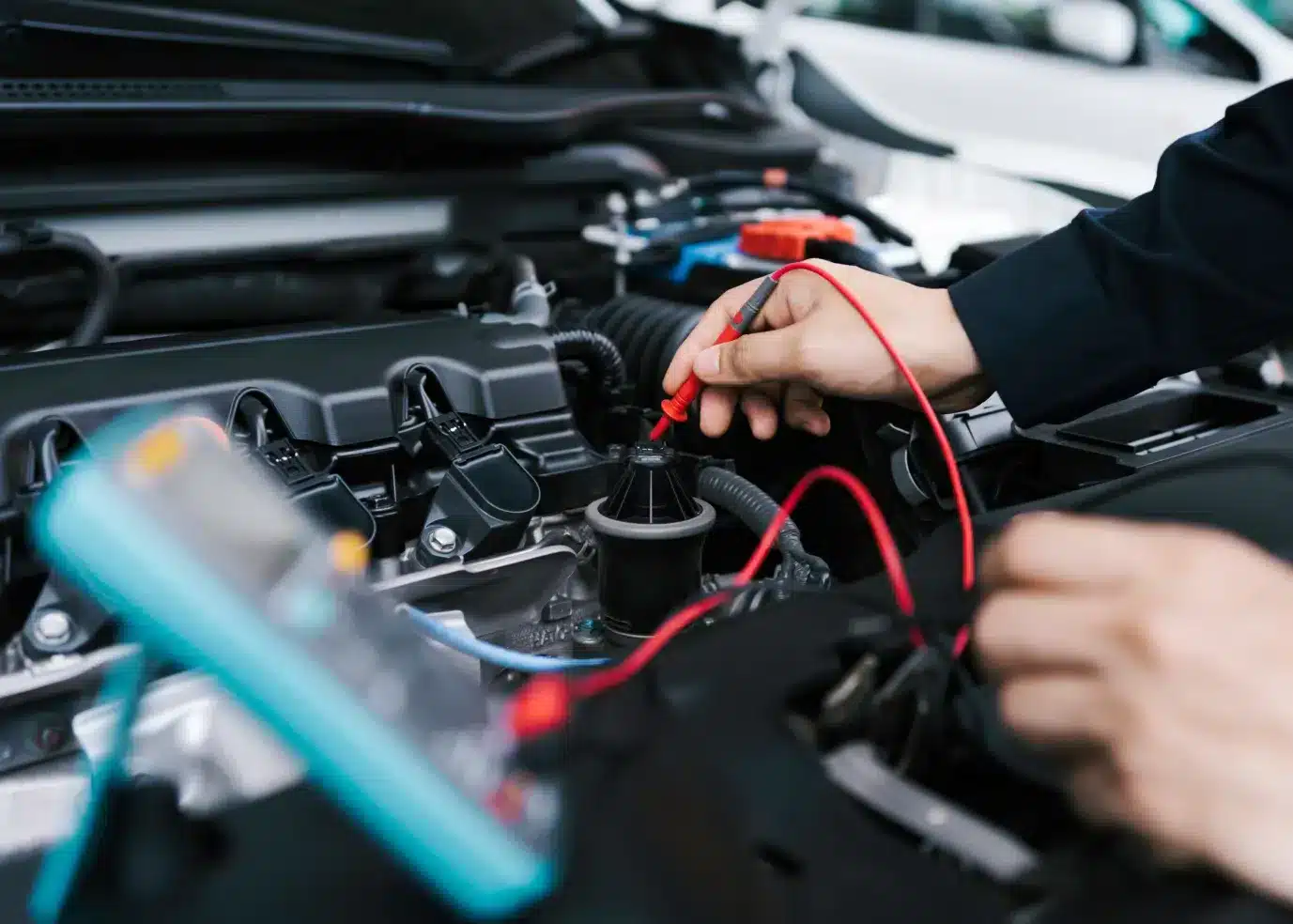
Glow plugs preheat the combustion chamber so your diesel can fire in cold weather. After a full winter of heavy use, they wear out. A weak glow plug means slower preheating, harder starts, and more strain on the battery and starter. Diesel engines also require a large amount of electrical current to crank, and cold temperatures significantly reduce battery capacity. A battery that tested fine last fall may be near the end of its life after a winter of hard cranking.
If your diesel has been cranking longer before it catches, both a glow plug inspection and a battery load test should be on your spring list.
Coolant System Issues
If your coolant mixture was not properly maintained before winter, corrosion may have started developing inside the cooling system. Low coolant levels or degraded antifreeze can leave scale buildup on the water pump and radiator. If your diesel runs hotter than normal this spring or you notice a sweet smell from the engine compartment, have your coolant system inspected. A failing water pump or a compromised head gasket can develop quietly over winter and become apparent once the engine is working harder.
Ready to get ahead of it? You can reach us at 937-746-7999 or visit us at 216 Hiawatha Trail, Springboro, OH 45066. Our team is ready to take a look and keep your truck running right.
How to Prevent These Problems Going Forward
The best defense is a solid preventative maintenance routine. A few targeted services before and after winter can keep your diesel running strong for years.
- Use a diesel fuel additive before winter. A good additive lowers the gel point of your fuel, lubricates injectors, inhibits microbial growth, and prevents water contamination. Ask your technician what product works best for your engine and climate.
- Change your fuel filter on schedule. Most manufacturers recommend every 10,000 to 15,000 miles, but cold-weather driving warrants a pre-winter change and a spring inspection.
- Warm up your engine the right way. Modern diesels do not need long idle warm-up periods. Let the glow plug light go out, then drive gently for the first few minutes. This warms oil and seals faster than sitting in the driveway and avoids carbon buildup from excessive idling.
- Stay current on oil changes. Cold-weather driving accelerates oil degradation. If you are close to your interval after an Ohio winter, do not delay. Fresh oil circulates better, protects moving parts more effectively, and helps clear carbon deposits from cold starts.
Why Springboro Automotive Is the Right Call for Diesel Service
We have been serving drivers in Springboro and surrounding communities since 1994, and diesel engine repair is part of what we do best. We are a team of experienced technicians who take your vehicle personally.
- ASE-certified technicians: Accurate diesel diagnosis the first time, every time.
- NAPA Gold Auto Care certified: Backed by a NAPA 36/36 nationwide warranty on qualifying repairs.
- BG Products fuel services: Professional-grade injector and fuel system cleaning to restore performance.
- Snap-on and Autel diagnostic scanners: Precise diagnostics for diesel-specific issues.
- Night drop box and local ride service: Because your schedule should not stop for maintenance.
We service light-duty and medium-duty diesel trucks up to F-350 class, along with diesel passenger vehicles. If you are noticing any of the warning signs above, do not put it off. Diesel problems compound when left unaddressed.
FAQs About Diesel Engine Problems and Diesel Repair
What causes diesel engines to have problems after winter?
Diesel engines face problems after winter primarily due to fuel gelling, contaminated filters, cold-start wear on internal components, and electrical strain on glow plugs and batteries. Ohio’s freeze-thaw cycles intensify these effects, making a post-winter inspection especially important.
How can I prevent diesel fuel from gelling in cold weather?
Prevent diesel fuel gelling by adding a winter-rated fuel additive to your tank before temperatures drop, which lowers the gel point and keeps fuel flowing freely. Keeping your tank at least half full also reduces moisture condensation inside the fuel system.
What are the signs of clogged diesel injectors or filters?
Signs include hard starts, loss of engine power, excessive black or gray exhaust smoke, rough idling, and reduced fuel economy. These symptoms often become more noticeable after extended cold-weather use.
How often should I service my diesel engine in Ohio?
Diesel engines in Ohio should have oil changes every 5,000 to 7,500 miles and fuel filter replacement every 10,000 to 15,000 miles, with added inspections before and after each winter season. Harsh Ohio winters may warrant more frequent service intervals.
Can cold weather damage my diesel engine's glow plugs or battery?
Yes, cold weather significantly stresses both glow plugs and batteries. Repeated cold-start demands can wear out glow plugs over a single winter, while low temperatures reduce battery capacity and increase cranking load, shortening battery life.
Schedule Your Diesel Engine Repair in Springboro Today
Winter takes a real toll on diesel engines, from gelled fuel and clogged filters to worn glow plugs and drained batteries. The damage can quietly stack up before you ever notice a problem, and preventative maintenance is always less expensive than an emergency repair. If you have been pushing through Ohio winters without a post-season checkup, now is the time to get ahead of it.
Schedule your diesel engine repair or post-winter inspection with Springboro Automotive. Visit us at 216 Hiawatha Trail, Springboro, OH 45066, or call 937-746-7999 to book your appointment. Our ASE-certified team is here to keep your diesel running strong all year long.